
The Chestnut Story: Why This Humble Autumn Nut Has Become a Seasonal Favourite Around the World
By: MyKashmir | October 2026
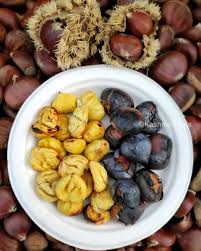
From mountain orchards and autumn markets to roasting pans and festive tables, the chestnut is much more than another nut. Here is the story behind one of the world’s most distinctive seasonal foods.
There are foods that announce themselves with colour, aroma and noise.
And then there are foods that arrive quietly.
Chestnuts belong to the second category.
When autumn begins to settle across the mountains, chestnut trees begin offering one of nature’s most recognisable seasonal harvests. Their spiky husks hide smooth brown nuts, which eventually find their way into markets, kitchens, street stalls and family gatherings.
For many people, the first encounter with chestnuts is memorable: a warm nut being cracked open, the shell removed, and a soft, slightly sweet, earthy centre revealed underneath.
It is an uncomplicated pleasure.
Yet behind that simple snack is a surprisingly rich story involving horticulture, nutrition, traditional cooking, seasonal commerce and centuries of human food culture.
From Europe and Asia to the Himalayan region, chestnuts have been cultivated, collected and eaten in different forms for generations.
And in Kashmir, where chestnut cultivation has its own documented history, the arrival of the harvest adds another flavour to the Valley’s autumn calendar.
What Exactly Is a Chestnut?
Before getting into the romance of roasted chestnuts, it is worth understanding what they actually are.
The edible sweet chestnut belongs to the genus Castanea, with Castanea sativa — commonly called European or sweet chestnut — being one of the best-known species.
Chestnuts are members of the beech family, Fagaceae.
That already makes them different from familiar tree nuts such as almonds, walnuts and pistachios.
They are also nutritionally unusual.
Unlike many conventional nuts, chestnuts contain relatively little fat and considerably more water and carbohydrate. Their cooked flesh tends to be soft, starchy and mildly sweet rather than oily or crunchy.
This unusual combination is one reason chestnuts have historically been used not merely as snacks but also as an ingredient in everyday cooking.
The Spiky Shell Has a Purpose
The chestnut’s appearance is almost a lesson in natural packaging.
Before reaching the kitchen, the nut develops inside a prickly outer husk, sometimes called a burr.
The sharp spines help protect the developing nuts from animals and environmental damage.
Once mature, the burrs open and the chestnuts can be collected.
The familiar polished brown shell is therefore not the first layer of protection.
There is an entire natural armour system around the edible kernel.
That is one reason freshly harvested chestnuts look quite different from the packaged nuts consumers eventually see in shops.
Why Chestnuts Are Associated So Strongly With Autumn
Seasonality is central to the chestnut experience.
Unlike almonds, cashews or many commercially processed nuts that are readily available throughout the year, fresh chestnuts are strongly associated with the autumn and early winter period in many regions.
Their arrival has consequently become a cultural marker.
Autumn markets begin changing.
Roasting fires appear.
Street vendors prepare batches for customers.
Families begin looking for the year’s harvest.
The chestnut becomes part of the season rather than simply another ingredient.
And that may explain why chestnuts continue to have such a strong emotional connection with food traditions around the world.
A Food With a Long Human History
Chestnuts have been eaten for centuries, particularly in regions where the trees grew naturally or could be cultivated successfully.
Historically, they were valuable because the trees could provide both food and a dependable seasonal harvest.
The nuts could be eaten fresh or cooked, while different communities developed their own methods of preserving and preparing them.
In some traditional food cultures, chestnuts were important enough to function almost like a staple carbohydrate.
Today, the chestnut is more likely to be marketed as a speciality or seasonal delicacy.
But its basic appeal has not changed.
It remains filling, versatile and relatively easy to prepare.
Kashmir’s Forgotten Autumn Nut
Kashmir is better known internationally for apples, walnuts, saffron, almonds and a remarkable range of traditional foods.
But chestnuts have also been part of the region’s horticultural landscape.
A peer-reviewed study published in the International Journal of Fruit Science documented sweet chestnut (Castanea sativa) selections in Srinagar district, examining variations in nut size, weight, colour, taste-related characteristics, peeling behaviour and yield. Researchers studied naturally occurring chestnut populations and identified promising selections for further cultivation and improvement.
That research is significant because it shows that Kashmir’s chestnut story is not simply a matter of an occasional wild harvest.
There is a documented horticultural resource here.
The same research noted that chestnuts occur across Himalayan regions and that Kashmir contains considerable variation among naturally occurring trees.
In other words, beneath the familiar image of Kashmir’s apple orchards lies another, less-publicised fruit story.
The chestnut.
One Chestnut, Many Names
Regional food terminology can sometimes create confusion.
Chestnuts are known by different names in different communities, languages and regions.
In Kashmir-related literature, researchers have recorded local names including Panjaeb gour and singhara for chestnuts.
But there is an important distinction for modern consumers.
Sweet chestnut and water chestnut are not the same thing.
Water chestnut is an entirely different aquatic crop. India’s Geographical Indications Registry currently lists Kashmir Water Chestnut as a separate GI application, further illustrating the distinction between the two products.
So when discussing the roasted autumn nut associated with Castanea sativa, terms such as sweet chestnut or fresh chestnut are clearer.
That distinction matters increasingly as regional products move from local markets to online marketplaces.
What Does a Chestnut Actually Taste Like?
If your first expectation is that a chestnut should taste like a walnut or almond, prepare to be surprised.
It doesn’t.
A properly cooked chestnut is generally:
- Mildly sweet
- Earthy
- Creamy
- Starchy
- Slightly nutty
- Soft rather than crunchy
Roasting changes the aroma and flavour further, producing a warm, toasted character.
The texture is perhaps the biggest surprise.
A roasted chestnut can be soft enough to break apart between your fingers, almost somewhere between a nut and a cooked grain.
That makes it particularly versatile.
It can be eaten alone, incorporated into savoury dishes or turned into sweet preparations.
Why Roasting Works So Well
Roasting is perhaps the most iconic way to prepare chestnuts.
And there is science behind the transformation.
Research from the University of Kashmir has examined how pan and microwave roasting affect the physicochemical and functional properties of sweet chestnuts. The study found that roasting changes several characteristics of the nut and can influence its flavour and nutritional composition.
Another review of sweet chestnut nutrition notes that processing methods such as roasting and boiling can alter the nut’s composition, including starch and dietary-fibre characteristics.
In practical terms, roasting does three important things:
It softens the flesh.
It develops aroma.
It makes the nut easier and more enjoyable to eat.
That is why a raw chestnut and a roasted chestnut can feel like two very different foods.
The Most Important Chestnut Cooking Rule
There is one simple safety detail every first-time chestnut buyer should know.
Do not roast whole chestnuts without making an appropriate cut in the shell first.
Chestnuts contain moisture, and heating them creates steam inside the shell.
A small cut allows steam to escape during cooking.
Once scored, chestnuts can be roasted using an appropriate oven, pan or other suitable method according to the cooking equipment being used.
After cooking, allow them to cool enough to handle safely before peeling.
The inner skin can sometimes cling tightly to the flesh, but peeling is generally easier while the chestnuts remain warm.
From Street Food to Gourmet Ingredient
Chestnuts have travelled a remarkable culinary journey.
One moment they are being roasted simply and eaten by hand.
The next they are being transformed into sophisticated dishes.
Around the world, chestnuts appear in:
Soups
Cooked chestnuts can add body, sweetness and texture to seasonal soups.
Stuffings
Their soft texture works well in stuffing preparations.
Desserts
Chestnuts can be turned into purées, creams, cakes and other sweet preparations.
Breads and Baking
Chestnut flour is used in several culinary traditions and can provide a distinctive flavour.
Salads and Grain Dishes
Cooked chestnuts can introduce a soft texture and mild sweetness.
Simple Snacks
And, of course, the original remains difficult to beat:
warm roasted chestnuts eaten straight from the shell.
A Seasonal Food Worth Exploring
Modern supermarkets have made it possible to find almost everything throughout the year.
That convenience is useful.
But it has also made seasonal foods feel less special.
Chestnuts offer the opposite experience.
They remind us that some foods still have a season.
They arrive.
They are enjoyed.
They disappear.
And then, months later, people wait for them again.
That cycle gives seasonal produce an emotional value that is difficult to reproduce with year-round availability.
Discover More Seasonal Flavours From Kashmir
Kashmir’s food heritage extends far beyond the products most commonly associated with the Valley.
From saffron and Kahwa to walnuts, dried fruits, spices, traditional foods and regional specialities, the region has a remarkable pantry of its own.
For readers interested in exploring that heritage from home, Kashmir Store offers a curated route into Kashmiri food and traditional products.
Explore authentic Kashmiri flavours and seasonal products at Kashmir Store.
Are Chestnuts Actually Healthy?
Chestnuts have gained attention from nutrition-conscious consumers, but the nutritional story needs some context.
They are not nutritionally identical to almonds, walnuts or cashews.
Sweet chestnuts are relatively low in fat and contain carbohydrates, fibre and several micronutrients. Their composition also changes depending on whether they are eaten raw, boiled or roasted.
That makes them interesting as part of a varied diet.
But it is better to avoid turning chestnuts into a miracle food.
They are not a cure for disease.
They are not a substitute for a balanced diet.
They are simply a distinctive whole food with an interesting nutritional profile.
And sometimes that is enough.
Chestnuts vs Other Popular Nuts
| Feature | Chestnuts | Walnuts | Almonds |
|---|---|---|---|
| Texture when cooked | Soft, creamy | Firm | Firm/crunchy |
| Natural flavour | Mildly sweet | Rich, earthy | Mild, slightly sweet |
| Fat content | Relatively low | Higher | Higher |
| Carbohydrate | Relatively high | Lower | Lower |
| Common preparation | Roasted/boiled | Raw/roasted | Raw/roasted |
| Strong seasonal identity | Yes | Less pronounced | Less pronounced |
The comparison explains why chestnuts occupy their own category.
They may be called a “nut”, but in the kitchen they often behave more like a versatile starchy ingredient.
How to Select Good Fresh Chestnuts
If you are buying fresh chestnuts, appearance alone is not enough.
1. Look for Firmness
Fresh nuts should generally feel firm and substantial for their size.
2. Inspect the Shell
Avoid nuts with obvious mould, major cracks or signs of deterioration.
3. Check for Excessive Softness
Unusually soft nuts may indicate deterioration.
4. Look at the Weight
A chestnut that feels reasonably heavy for its size can be a useful freshness indicator, although size and variety naturally differ.
5. Buy According to Your Needs
Fresh chestnuts are perishable compared with properly dried nuts.
If you are buying them for home use, purchase an amount you can store appropriately and consume within a reasonable period.
Fresh Chestnuts Are Not the Same as Dried Chestnuts
This distinction is important for shoppers.
Fresh chestnuts contain significant moisture and have a softer, more perishable nature.
Dried chestnuts have undergone moisture removal and are intended for longer storage and different cooking applications.
The two products can have very different textures and preparation requirements.
So if a recipe calls for fresh chestnuts, substituting dried chestnuts without adjusting the preparation may not produce the expected result.
How Should Fresh Chestnuts Be Stored?
Fresh chestnuts require more care than many dried nuts.
Their relatively high moisture content means that poor storage can lead to deterioration.
For home buyers, the key principles are:
- Keep them cool.
- Avoid trapping moisture unnecessarily.
- Inspect them periodically.
- Remove damaged nuts.
- Follow the storage instructions supplied by a reputable seller.
- Do not assume fresh chestnuts have the same shelf life as dried walnuts or almonds.
If purchasing online, storage and delivery information should be checked before ordering.
Kashmir in a Basket: More Than Saffron and Walnuts
The story of chestnuts also opens a larger conversation about regional food.
Every region has ingredients that outsiders may know little about.
Some become internationally famous.
Others remain quietly local.
The internet is changing that.
A consumer in Delhi, Mumbai, Bengaluru or elsewhere may now discover a seasonal food from a mountain region without physically travelling there.
That creates opportunities for local growers, food producers and regional marketplaces — provided quality, freshness, packaging and product information are handled responsibly.
Kashmir Bazar is one such marketplace connecting customers with a wider range of products associated with Jammu & Kashmir.
Discover Kashmiri food, gourmet products, fresh produce and regional specialities at Kashmir Bazar.
Chestnut Season and the Future of Kashmir’s Horticulture
Kashmir’s fruit economy has historically been strongly associated with apples.
But agricultural research has repeatedly highlighted the importance of diversification.
The Srinagar chestnut study specifically examined naturally occurring chestnut diversity and identified promising selections based on traits such as yield, nut size and quality characteristics. Researchers also noted the potential importance of chestnuts within agroforestry systems and the need to conserve valuable genetic resources.
That makes chestnut cultivation relevant beyond the food market.
It is also a question of:
crop diversification,
genetic conservation,
rural livelihoods,
agroforestry,
and the preservation of lesser-known regional crops.
A chestnut may be small.
Its agricultural story is not.
The Chestnut’s Secret: It Makes Food Social
There is another reason chestnuts have survived across cultures.
They are naturally social.
A plate of roasted chestnuts rarely stays with one person.
Someone peels one.
Someone asks for another.
A conversation starts.
A cup of tea appears.
A cold evening becomes warmer.
That may sound sentimental, but food traditions often survive precisely because they create these small moments of connection.
The chestnut is therefore not merely an ingredient.
It is part of an experience.
Five Creative Ways to Enjoy Chestnuts
Want to move beyond the traditional roast?
Try these ideas.
1. Chestnut & Honey Bowl
Combine warm cooked chestnuts with a small amount of honey and cinnamon for a simple autumn dessert.
2. Chestnut Breakfast Mash
Mash cooked chestnuts with warm milk or a suitable alternative, then add fruit, nuts or spices.
3. Chestnut Soup
Blend cooked chestnuts with seasonal vegetables and stock for a creamy autumn soup.
4. Chestnut Rice
Fold chopped cooked chestnuts into a rice preparation with herbs and selected vegetables.
5. Classic Roasted Chestnuts
Sometimes the most creative choice is to do nothing complicated.
Score.
Roast.
Peel.
Eat.
Kashmir Store | Bring the Valley’s Pantry Home
Chestnuts are only one chapter of Kashmir’s food story.
The Valley is equally famous for ingredients and foods such as saffron, Kahwa, walnuts, almonds, dried fruits, spices and traditional preparations.
For consumers who want to explore that wider collection, Kashmir Store offers an online destination focused on Kashmiri food, heritage products and regional specialties.
Explore Kashmir’s traditional pantry at Kashmir Store.
What Makes a Seasonal Food Valuable?
Price is only one measure.
There is also rarity.
There is freshness.
There is cultural identity.
There is the connection between a product and the landscape where it grows.
And there is the simple fact that it cannot be enjoyed in exactly the same way throughout the year.
That is why seasonal foods often become increasingly valuable in a world dominated by mass-produced, year-round products.
The chestnut represents that old-fashioned relationship with food.
You wait for it.
You enjoy it.
And then you wait again.
A Note About the “Royal Nut” Label
Chestnuts are sometimes described in promotional material as a “royal nut” or “royal food.”
The phrase makes for an attractive headline, but it should be treated as a descriptive or cultural expression rather than an official classification.
There is no recognised scientific category called “royal nut.”
What makes chestnuts genuinely interesting is more substantial:
their long history, seasonal character, distinctive nutritional composition, culinary versatility and connection with regional food traditions.
The real story is already good enough.
It does not need exaggeration.
Chestnuts and the Changing Idea of Premium Food
There was a time when premium food largely meant imported products, elaborate packaging or expensive ingredients.
That idea is changing.
Consumers are increasingly interested in:
- Where food comes from
- Who grows it
- How it is harvested
- Whether it is seasonal
- Whether traditional methods are involved
- How it reaches the consumer
- Whether regional producers benefit
A humble chestnut can therefore become a premium experience — not because it is artificially marketed as luxurious, but because people increasingly value authenticity and provenance.
That is a much more interesting definition of premium.
From Orchard to Online Basket
The journey of a chestnut today can be remarkably different from the journey it took a generation ago.
It may begin in a Himalayan orchard.
Move through a local market.
Be sorted and packaged.
Travel hundreds of kilometres.
And eventually arrive at someone’s kitchen hundreds or thousands of kilometres away.
That journey makes freshness and traceability increasingly important.
For online shoppers, product descriptions should ideally explain:
- Product variety
- Whether it is fresh or dried
- Approximate harvest period
- Pack size
- Storage instructions
- Country/region of origin
- Expected delivery conditions
- Seller or marketplace information
These details are particularly important for seasonal foods.
Discover Kashmir Beyond the Postcard
Kashmir is often photographed through its landscapes.
But food can tell a different story.
A walnut orchard.
A saffron field.
A steaming cup of Kahwa.
A basket of autumn apples.
A plate of dried fruits.
And, for a short period of the year, freshly harvested chestnuts.
Kashmir Bazar brings together a broader selection of regional foods and products for people who want to experience more of Kashmir beyond the postcard image.
Visit Kashmir Bazar and explore the flavours and products of Kashmir.
The Future of the Chestnut Is Not Just About Nostalgia
It would be easy to treat chestnuts as a nostalgic food.
But there is a much bigger opportunity.
With better cultivation, selection of high-quality varieties, improved post-harvest handling and wider consumer awareness, chestnuts can potentially occupy a stronger place in modern food markets.
Research in Kashmir has already demonstrated significant variation among chestnut populations and identified promising selections.
That means the story does not have to end with traditional roasting.
There is room for:
better varieties,
better packaging,
new recipes,
processed chestnut products,
value-added foods,
and greater awareness of Kashmir’s lesser-known horticultural resources.
10 Things You Probably Didn’t Know About Chestnuts
1. They are not botanically the same as almonds or walnuts.
Chestnuts belong to the genus Castanea.
2. They are relatively low in fat compared with many familiar nuts.
Their nutritional composition is unusually carbohydrate-rich for a nut.
3. They are strongly seasonal.
Fresh chestnuts are particularly associated with autumn.
4. Their outer husk is covered in spines.
The burr protects the developing nuts.
5. Roasting changes their character.
Heat transforms the texture and aroma.
6. Chestnuts can be used in both sweet and savoury foods.
They are remarkably versatile.
7. Kashmir has documented chestnut diversity.
Research has identified multiple chestnut selections in Srinagar district.
8. Sweet chestnut and water chestnut are different.
The two should not be confused.
9. Chestnuts can be made into flour.
Chestnut flour is used in several culinary traditions.
10. Their greatest appeal may be seasonal.
For many consumers, chestnuts are special precisely because they are not an everyday food.
Frequently Asked Questions
Are chestnuts actually nuts?
Botanically, the chestnut is a nut — specifically the fruit of trees in the genus Castanea. Its nutritional and culinary characteristics, however, differ considerably from many commonly eaten tree nuts.
Are chestnuts healthy?
Chestnuts can form part of a balanced diet. They are relatively low in fat and provide carbohydrates, fibre and various micronutrients. Their nutritional composition changes depending on preparation.
Can chestnuts be eaten raw?
They can technically be eaten raw, but cooking is the more common preparation and improves their texture and flavour.
Why do you cut chestnuts before roasting?
Scoring the shell allows steam to escape during cooking and helps prevent pressure from building inside the nut.
What do roasted chestnuts taste like?
They are generally mild, earthy, slightly sweet and starchy, with a warm roasted aroma.
Are Kashmir chestnuts the same as water chestnuts?
No. Sweet chestnuts and water chestnuts are entirely different products. The GI Registry separately identifies Kashmir Water Chestnut as its own product application.
When is chestnut season?
The exact harvest period varies by region and weather, but fresh chestnuts are strongly associated with autumn.
Can chestnuts be stored?
Yes, but fresh chestnuts require more careful storage than dried nuts because of their moisture content. Buyers should follow appropriate storage guidance and consume them within a suitable period.
Can chestnuts be used in desserts?
Absolutely. Their naturally sweet, starchy flesh works particularly well in creams, purées, cakes and other desserts.
Are chestnuts grown in Kashmir?
Yes. Academic research has documented Castanea sativa chestnut populations and selections in Srinagar district and elsewhere in the Himalayan region.
The Final Bite
Perhaps the best thing about chestnuts is that they refuse to fit neatly into one category.
They are a nut, but they do not taste like most nuts.
They are a seasonal crop, but they have travelled across continents.
They can be street food, home cooking or a gourmet ingredient.
They can be roasted over heat, folded into savoury dishes or transformed into desserts.
And in places such as Kashmir, they represent something even more valuable — a lesser-known part of a region’s agricultural and culinary identity.
So the next time autumn arrives and you see a basket of fresh chestnuts, pause before walking past.
Look at the shells.
Think about the orchard.
Think about the season.
Then roast a few.
Because sometimes the most memorable food experiences are not the most complicated ones.
Sometimes they are simply the ones that arrive for a short time, taste of a particular place, and disappear before you have had enough.
That is the magic of seasonal food.
Explore More From Kashmir
If this chestnut story has made you curious about the Valley’s wider food and craft heritage, there is plenty more to discover.
Explore Kashmir Store for Kashmiri food products, traditional favourites, heritage items and regional specialties.
Discover Kashmir Bazar for a broader marketplace of Kashmiri foods, fresh produce, gourmet products, dry fruits, crafts and lifestyle products.
Kashmir is not just a destination to visit. It is a culture to taste, discover and take home.